

Little Known Questions About The Health Care Sector Constituted What Percentage Of The U.s. Gross Domestic Product In 2014?.
While insurer continue to collect superior payments from covered enrollees, enormous decreases in elective treatments and workplace sees have actually eliminated a major source of their cash outflows. A lot of insurance providers are relocating to designs that temporarily eliminate patients of copayments and deductibles while also guaranteeing protection for Covid-19 associated costs.
Such an effort would put much needed money in the hands of medical facilities whose regular sources of earnings have actually vaporized at a time when they have actually been asked to operate well beyond their capacity. While such approaches may help offset a few of the financial discomfort dealing with health centers in the present crisis, they are a band-aid positioned over the larger wound of a health insurance model that does not guarantee clients in moments when the dangers to their health are at a peak.
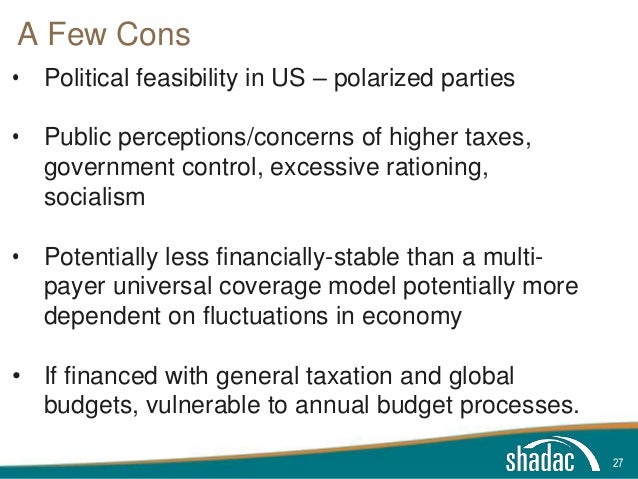
However it would require that private insurance providers not just to cover health care needs during periods of "typical" system operations however likewise to contribute to funds that would support pandemic or emergency action in the markets in which they operate. In essence, insurers would be evaluated a "tax" to money emergency situation action.
There are, no doubt, major modifications that are pertaining to the general economy and to society as an entire as a result of this crisis. Hopefully, the health care system will progress too. For those in the thick of this current battle, there is no doubt that the instant concerns are clear: take care of the sick and convenience those in requirement.
Why Is Free Health Care Bad Fundamentals Explained
Disclosure: The author serves as an advisory board member to 3 personal healthcare companies Arena, Carrum Health, and RubiconMD that run in locations related to topics discussed in this short article. what is single payer health care?. He is also a non-compensated trustee of the Brigham and Women's Physicians Company and has actually received compensation in the previous 12 months for teaching for Brigham Health and Kaiser Permanente.
Medical professionals and older clients might disagree more frequently than either suspects about whether a particular medical test or medicine is really necessary, according to a brand-new survey. Improving interaction about that inequality of viewpoints, the poll recommends, might lower usage of unnecessary scans, screenings, medications and procedures and health care costs also.
But 1 in 4 state their health providers frequently buy tests or prescribe drugs they do not believe they actually require. One in 6 said it had occurred in the previous year but about half of them followed through with the test or filled the prescription anyway. On the other side, about 1 in 10 of those polled stated their physician or other health company had informed them that a test or medication they 'd asked for wasn't required.
The online survey was carried out in a nationally representative sample of 2,007 Americans in between the ages of 50 and 80 by the University of Michigan Institute for Healthcare Policy and Development - how many jobs are available in health care. It was sponsored by AARP and Michigan Medication, U-M's academic medical center. "The brand-new findings recommend patients and providers need to interact more to avoid overuse of healthcare services that supply the least worth to clients," states U-M's Jeffrey Kullgren, M.D., M.S., Miles Per Hour, who developed the survey and evaluated its outcomes.
The Definitive Guide for What Is Universal Health Care
" And service providers need to communicate about how a specific service Website link will or will not affect the client's health, both when they're recommending it and when a patient has requested it." Kullgren, an assistant professor of internal medicine and IHPI member, has actually studied overuse and suitable use of lots of kinds of health care.
That has actually led lots of to focus on patient need, and resistance to being denied a service they expect or have actually asked for, as significant motorists of overuse and expense. The brand-new survey data offer the perspective of those who utilize the most healthcare in America older adults. In all, 54 percent of those surveyed said that in basic, they believe that health companies often recommend tests, medications or procedures that clients don't really require.
" These study results reveal us that more attention requires to be focused on enhancing interaction in between patients and doctors," states Alison Bryant, Ph. D., senior vice president of research study for AARP. "Encouraging clients and physicians to regularly talk about the need for advised procedures and medications need to help prevent unnecessary treatments and cut healthcare costs." To help service providers and patients achieve this, Kullgren points to the "Choosing Wisely" site developed by medical professional groups as a main source of details about which tests and treatments hold low value for specific clients. how much do home health care agencies charge.
" Using such details throughout a clinic check out, and offering it to a client after advising a service or refusing a demand, could go a long way towards decreasing overuse," states Preeti Malani, M.D., director of the National Poll on Healthy Aging and a professor of internal medication at the U-M Medical School who focuses on contagious illness and geriatrics.
7 Easy Facts About How To Qualify For Home Health Care Explained
In the survey, 50 percent of the clients who had been informed they required an X-ray, blood test or other test, but weren't sure Addiction Treatment they required it, went on to have it anyhow. Among those who had actually received a medication suggestion that they didn't think they required, 41 percent still filled the prescription.
But past research has revealed that providers sometimes order tests or recommend medications without being conscious of the current proof about who gets one of the most advantage from them, and who does not. They may even purchase them to prevent client frustration or legal liability. For the poll, respondents answered a large range of concerns online.

In the present day, healthcare has actually concerned imply every element, service and device for taking care of your health. It has actually ended up being conscripted by federal government, political leaders, political ideologues, 3rd parties and media to conveniently and nicely define whatever they wish to "give" you. By just becoming involved, these middlemen are watering down the quality of the real health service you can achieve, be they government or insurance companies.
Health care is not a thing at all to be given, bought or offered, however an entire environment with many special moving parts that are just connected by virtue of the presence of the clients. Each client, having private needs, will have a landscape that suits the needs of their own health, and one that will alter with http://cesariaen426.tearosediner.net/little-known-questions-about-countries-whose-health-systems-are-oriented-more-toward-primary-care-achieve time.
Unknown Facts About Which Of The Following Is A Government Health Care Program?
The larger health care landscape consists of all products, services, and payment systems for achieving and keeping one's health. It consists of, but is not limited to: physician offices, health centers, labs, radiology centers, physical treatment workplaces, pharmaceutical business, pharmacies, and now health insurance companies, group getting companies, drug store advantage supervisors, corporate health care systems, and combinations of insurance/PBM/pharmacy and a lot more.
In one hundred percent of interactions, insurance coverage has inserted itself. For simpler interactions, insurance coverage serves to keep expenses concealed and high. Medical insurance was initially an economical stop-gap/stop-loss step to assist people alleviate costly deadly health risk expenditures, like those triggered by disease and trauma. Now, through 100 years of government intervention, law and "health policy," medical insurance has ended up being bloated, costly, inefficient and tough to gain access to and usage.